
Ownership models
Erbbaurecht: buying a hereditary building right
Erbbaurecht is a right to a building, not ownership of the land under it. Check the remaining term, ground rent, consent and Heimfall before you sign.
On this page
A right to use somebody else's land, not ownership of it
Buying Erbbaurecht means paying for a right to use land, not for the land itself. The lower asking price compared with a freehold plot is therefore not a simple discount. It sits alongside a recurring payment, the Erbbauzins, and a fixed end date. A buyer who compares only the purchase price is looking at half the arithmetic.
What matters for the decision is the time left until the right ends, not the term originally agreed. A contract with an original term of ninety years, sixty of which have already passed, is a different asset from the same contract on day one. That check belongs before any construction budget is drawn up, or a cheap-looking offer turns into a project with an uncertain finish line.
A second difference concerns the notary's job. The notarial deed and the land register entry follow the same procedure as an ordinary land purchase, but the Erbbaurecht agreement itself, with its own deadlines and conditions, has to be reviewed on top of that. Without this second review, a buyer examines only the simpler half of the transaction.
- What Erbbaurecht means in law: Section 1 ErbbauRG
- Remaining term matters more than the original one
- Raising the rent on residential land: Section 9a ErbbauRG
- Selling or mortgaging the right: consent under Section 5 ErbbauRG
- End of term and compensation: Section 27 ErbbauRG
Source: ErbbauRG §§ 1, 2, 5, 9a, 27 and 32; GBO; checked August 2026
What Erbbaurecht means in law: Section 1 ErbbauRG
The core right sits in § 1 ErbbauRG. Erbbaurecht is a transferable and inheritable right to have a building on or under the surface of a plot of land. The statute is federal law and applies the same way across the country. Under this structure the building does not automatically belong to the land; it belongs to the Erbbaurecht itself.
With ordinary land ownership, a building follows the land as a matter of course. Erbbaurecht is the statutory exception to that rule. What the buyer acquires is a right in rem with a defined scope and a fixed end date, not property in the usual sense. That distinction drives financing, resale and what happens once the term runs out.
Day to day, this means repairs to the building, insurance and upkeep sit with the holder of the right, while the landowner carries almost no duties toward the land itself. A buyer who has not settled this point before signing may be taking on maintenance obligations for a building whose condition is only known at a glance. The split is not automatic; it is fixed in the Erbbaurecht agreement and needs to be read in full, not skimmed, before the purchase.
Two land registers, one parcel
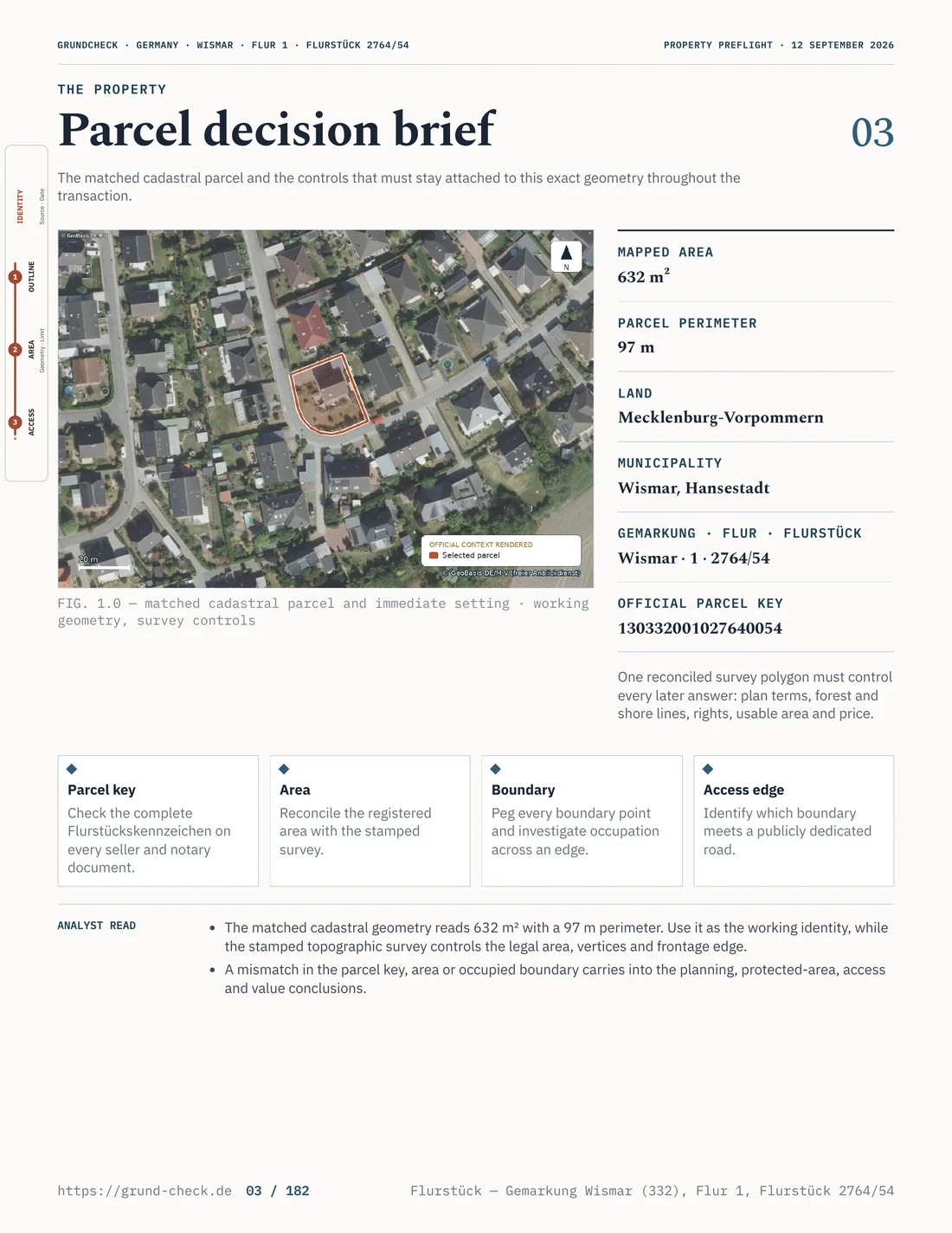
For Erbbaurecht the register picture is split in two. The right itself sits in its own Erbbaugrundbuch under § 11 ErbbauRG, while the charge on the underlying land is entered in the ordinary land register for the plot. Many listings show only one of these two extracts. Both belong in the same round of checks.
The same step is a good moment to cross-check the cadastral record, so that boundaries, parcel description and register entry line up. The land register and ALKIS guide explains that comparison in detail. One extract on its own is not enough while the identity between the parcel and the land register sheet remains unconfirmed.
Remaining term matters more than the original one
An original term of sixty to ninety-nine years is common. For financing, mortgage security and later resale, though, only the years remaining on the day of purchase count. A right with seventy-five years left and one with thirty-five years left can sit on the same kind of plot and still be two entirely different offers economically.
Below roughly forty years remaining, financing becomes difficult, because a bank cannot treat the asset as reliable security for the whole life of the loan. Check the exact expiry date from the Erbbaugrundbuch against the planned loan term before accepting an offer. A short remaining term is not automatically a reason to walk away, but it belongs in the price negotiation.
Erbbauzins: pricing the recurring charge
The Erbbauzins is agreed by contract and secured in the Erbbaugrundbuch as a Reallast, a recurring charge on the land, under § 9 ErbbauRG in connection with § 1105 BGB. It is payable regardless of actual use, which makes it a core part of the household budget rather than a footnote.
Project the annual Erbbauzins across the remaining term and add running costs and public charges. Only that combined figure shows whether the lower purchase price against a freehold actually pays off. Ask the seller for a traceable breakdown of the calculation basis, usually the land value, and work through the adjustment clause with the lender before the financing offer is confirmed.
Raising the rent on residential land: Section 9a ErbbauRG
§ 9a ErbbauRG allows an increase in Erbbauzins for residential use only as a response to a change in general economic conditions, and only after a statutory minimum gap since the contract was made or the last increase. An adjustment at the mere discretion of either party is ruled out.
For a lender, a vague adjustment mechanism is a credit risk, because future cost cannot be modelled with confidence. Ask for the full adjustment wording, including the reference figure and the interval, before signing. Where the clause has gaps, the seller should close them before the deed is notarised.
It is also worth comparing several Erbbaurecht offers side by side. Two plots with a similar purchase price can end up with a markedly different total burden over twenty years, depending only on how the adjustment clause is worded. Comparing the opening numbers alone misses that difference almost every time.
What the contract fixes from day one: Section 2 ErbbauRG
§ 2 ErbbauRG lists what the parties may regulate within an Erbbaurecht: building quality, upkeep, insurance and rebuilding after a loss, among other things. These terms bind every later holder of the right in rem and cannot be renegotiated afterwards.
For a buyer this means the present contract is not the end of the story; the entire chain of future holders is tied to the same clauses. Where the terms are clear, they can be worked through as fixed conditions during due diligence. Where they are vague, every gap resurfaces later at resale and in talks with a bank.
- Land register for the landOwner and burdens on the land
- ErbbaugrundbuchHeritable building right, rank and burdens
- Erbbaurecht deedTerm, ground rent, consent and reversion
Source: ErbbauRG §§ 1, 2, 5, 9a, 27 and 32; GBO; checked August 2026
Selling or mortgaging the right: consent under Section 5 ErbbauRG
§ 5 ErbbauRG allows the sale or mortgaging of the right to be made conditional on the landowner's consent. That consent can delay a sale or the registration of a mortgage if it is not sought in time.
Before the notary appointment, establish who applies for consent, what documents are required and whether consent is a condition for the purchase price becoming due. This belongs in the pre-contract coordination, not the notary appointment itself. A purchase contract with a fixed deadline for consent protects both sides from unnecessary delay.
Heimfall: the biggest risk in the contract
§ 32 ErbbauRG governs the compensation due on Heimfall; the events that trigger Heimfall are set out in the Erbbaurecht agreement itself under § 2 ErbbauRG. Common triggers are arrears on the Erbbauzins or a serious breach of the maintenance duty. Once Heimfall occurs, the right reverts to the landowner.
This mechanism is harsher than an ordinary termination, because the entire legal position changes hands, not just one contract. Read the Heimfall clause sentence by sentence: which breach triggers what, what deadlines apply before the reversion, and what counts as sufficient proof. An unclear clause should be tightened before the deed is signed.
End of term and compensation: Section 27 ErbbauRG
Once the agreed term expires, the right ends and the building becomes part of the land. § 27 ErbbauRG points to a compensation rule for the building, and the contract sets the amount and the calculation method. For a buyer, the exact figure matters less than the method: if the calculation is left vague in the contract, substantial valuation disputes follow at resale or at the end of the term.
For residential use, § 27 ErbbauRG contains a special minimum rule protecting the housing needs of people on lower incomes. Check the compensation clause before any other contract question, since it decides the economic value of the right once the term is over.
Bank financing: what lenders ask for on top
Banks scrutinise Erbbaurecht more closely than freehold property, because remaining term, Heimfall clauses and ranking in the land register narrow the security further. Submit both land register extracts, the consent wording under § 5 ErbbauRG, the Heimfall clause and the Erbbauzins adjustment clause before the notary appointment, not after.
A written confirmation from the landowner on how Heimfall would be handled often speeds up the credit decision as well. Without it, a bank may hesitate even after an initial approval, or set a tighter financing deadline. Build this step firmly into the timetable.
Some lenders also require a separate valuation of the Erbbaurecht rather than an ordinary property valuation, because the loan-to-value figure depends on the remaining term and not on the building value alone. That valuation can take several weeks. Early contact with the financing bank prevents the notary timetable from stalling on an internal review.
Tax and purchase costs
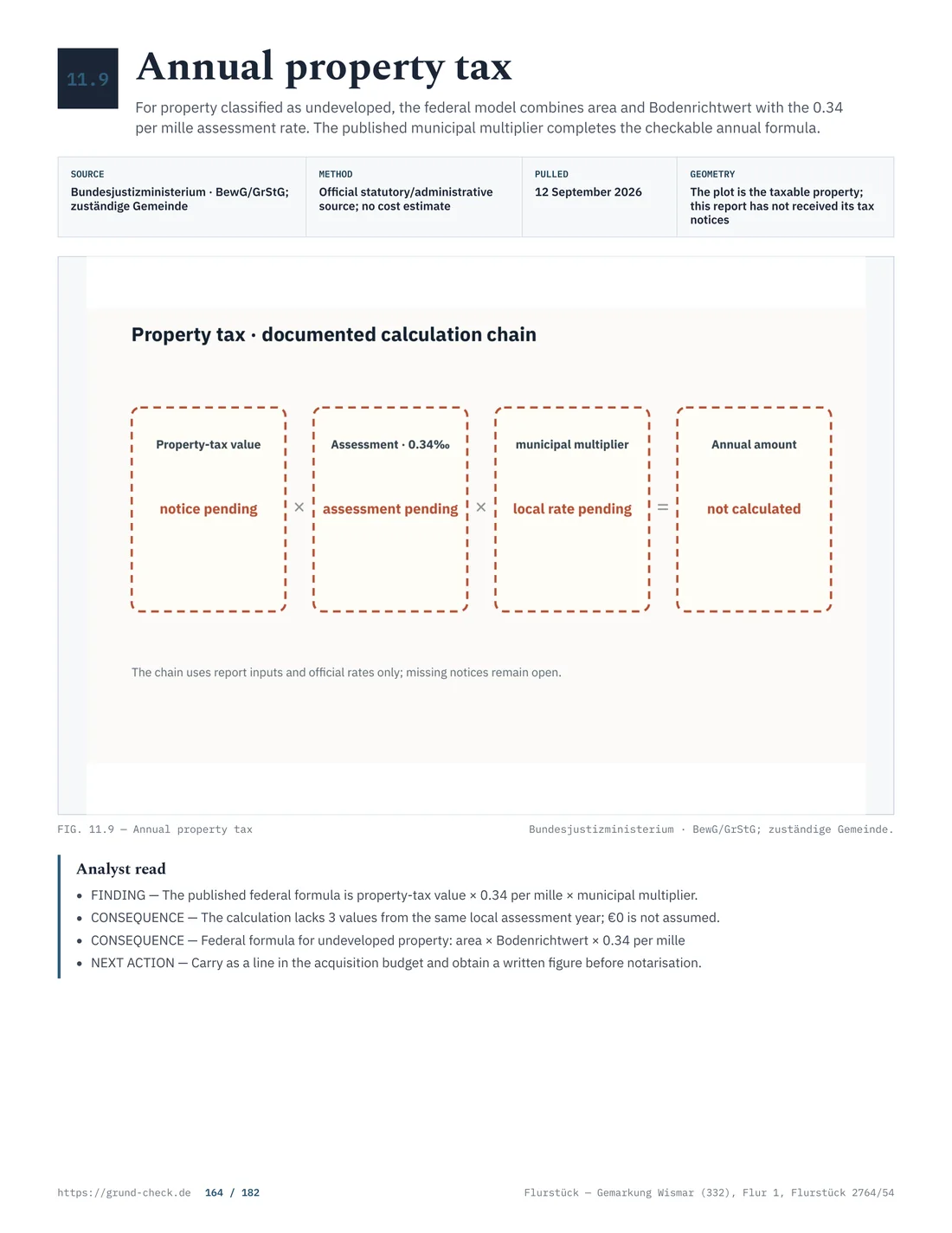
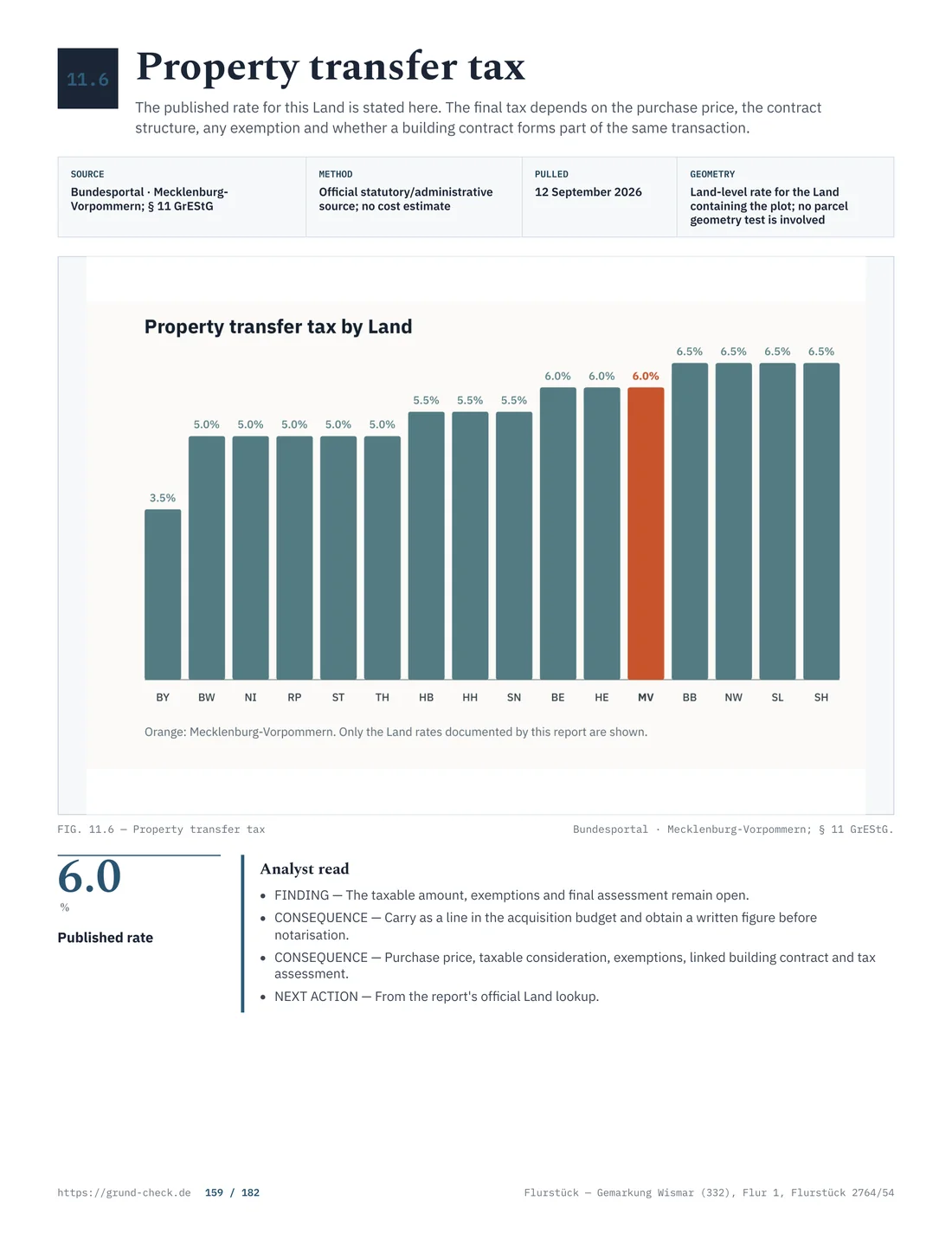
For Erbbaurecht, the assessment basis for the real estate transfer tax is calculated from the capitalised Erbbauzins payments rather than the land value, under § 8 GrEStG. The tax therefore depends on the ground rent and the remaining term, not simply on the advertised purchase price. The rate itself is set by each state under its own authority.
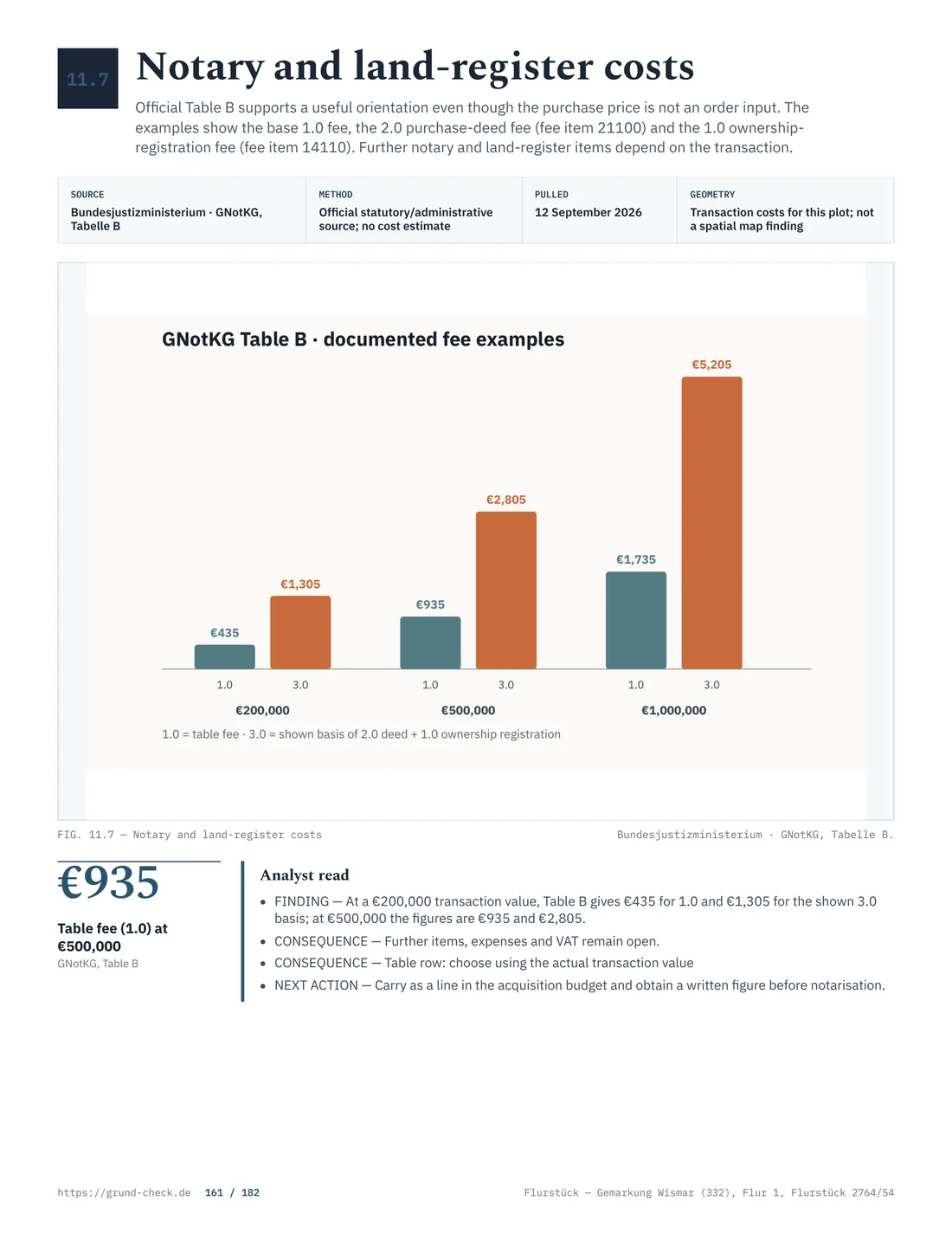
Notary and land register fees follow the GNotKG fee schedules, in particular Schedule 1 and Table B. Add up the purchase price, transfer tax at the applicable state rate, notary and registration costs, financing costs and the annual Erbbauzins before comparing the result with a freehold alternative.
Spot contractual risk early. A GrundCheck report shows how compensation, term and existing charges affect the value of an Erbbaurecht, giving you a clear basis for talks with the bank, notary and landowner. Check a parcel.
Who typically grants Erbbaurecht
On the land side, the grantor is often an institutional owner: a church, a foundation, a municipal housing company, or the municipality itself. That explains why contract templates tend to look uniform and why room for negotiation is narrower than with a private seller.
For a buyer this means the focus is not on a symbolic haggle over price, but on the quality of deadlines, valuation logic and safeguards in the contract text. Where the basic structure is rigid, a lower price can still make sense provided the remaining term, consent process and compensation rule are documented cleanly. Where those three points stay vague, a cheap offer erodes the real room for investment.
Speak to the grantor before making an offer, well ahead of the notary appointment. Ask about the internal practice for granting consent, the usual processing time, and whether template contracts exist that leave little room to negotiate. This does not change the law, but it does change the realistic timeline to completion.
Erbbaurecht does not replace the usual land checks
Erbbaurecht is a special model for the form of ownership, not for land due diligence. Buildability, contamination and utility connections still need the same scrutiny as with a freehold plot. Only a buyer who works through both review paths in full can honestly attribute the price advantage to the deal as a whole.
Start with the due diligence checklist and add a section of your own for remaining term, Erbbauzins adjustment, Heimfall, compensation and consent requirements. Check in parallel whether a binding local development plan applies as a municipal statute, since it decides what may be built on the plot at all; the zoning and buildability guide explains that check.
Weigh Erbbaurecht before you commit. A GrundCheck report reviews remaining term, ground rent, consent and Heimfall clauses so financing and long-term cost can be assessed properly before the notary appointment. Check a parcel.
The main contract points at a glance
| Point in the Erbbaurecht agreement | What to check | Consequence if missing or unfavourable |
|---|---|---|
| Remaining term | Years left, matched against the intended loan term | Lower loan-to-value, tighter exit |
| Erbbauzins and adjustment | Calculation basis and reference figure clearly named | Unreliable budgeting, harder credit decision |
| Consent on sale | Deadline and form of consent fixed under § 5 ErbbauRG | Delay at the notary, renegotiation |
| Heimfall | Triggers and deadlines spelled out | Loss of the right without warning |
| Compensation at expiry | Calculation method contractually clear | Dispute over residual value at the end of the term |
| Ranking of a bank mortgage | Priority in the Erbbaugrundbuch checked | Higher financing cost or refusal of financing |
| Inheritance | Succession, consent clauses and financing reviewed for the remaining term | Unexpected restrictions for heirs |
Erbbaurecht in inheritance
Erbbaurecht is inheritable like any other right in rem. If the holder dies, the right passes to the heirs together with all its duties, including the Erbbauzins and the Heimfall clauses. For the heirs, what matters is whether the remaining term is still long enough for their own use or for a sale.
An Erbbaurecht agreement can set its own consent requirement for the case of inheritance, if the heirs want to sell the right on. Inheritance tax is also assessed not on the land value but on the value of the right itself, which in turn depends on the remaining term. Early advice from a tax adviser spares heirs an unwelcome surprise in the valuation later.
When Erbbaurecht is worth it
Erbbaurecht can make sense where the remaining term is long, the landowner's consent process stays realistic, the Erbbauzins adjustment is transparent and the compensation logic is calculated fairly. Under those conditions, entering the arrangement is economically defensible, even with an ongoing extra payment.
The model becomes unsuitable where an early exit is likely, the remaining term is running short, or the bank already raises a strict security demand up front. In that case the lower purchase price often fails to offset the time pressure and adjustment risk, and freehold ownership is the simpler choice.
What differs between states
The Erbbaurecht statute itself is federal law and applies word for word in every state. Remaining term, Heimfall, consent duties and compensation therefore follow the same sections everywhere. The tax is governed by state law: each state sets its own real estate transfer tax rate, and because the assessment for Erbbaurecht rests on the capitalised Erbbauzins, a higher or lower state rate feeds straight through into the purchase costs.
What may be built on an Erbbaurecht plot also stays separate from the form of ownership. Whether a binding development plan applies, and how deep the setback from the boundary has to be, is decided by the municipality or by the building code of the relevant state, regardless of whether the plot is held freehold or as Erbbaurecht.
A nationwide comparison of transfer tax rates is being prepared as a separate feature; until then, the costs and taxes guide gives the next level of detail.
Sources and further reading
The statutory basis includes § 1 ErbbauRG, § 2 ErbbauRG, § 5 ErbbauRG, § 9 ErbbauRG, § 9a ErbbauRG, § 11 ErbbauRG, § 27 ErbbauRG and § 32 ErbbauRG. Also relevant are § 873 BGB, § 879 BGB, § 1105 BGB and § 8 GrEStG. Further sources are the GNotKG fee schedule, GNotKG Table B.
Rules and figures were checked in August 2026. This information is general in nature and not legal advice for a particular plot or Erbbaurecht agreement.
Read next: land register and cadastre, costs and taxes, notary process and closing and due diligence checklist.